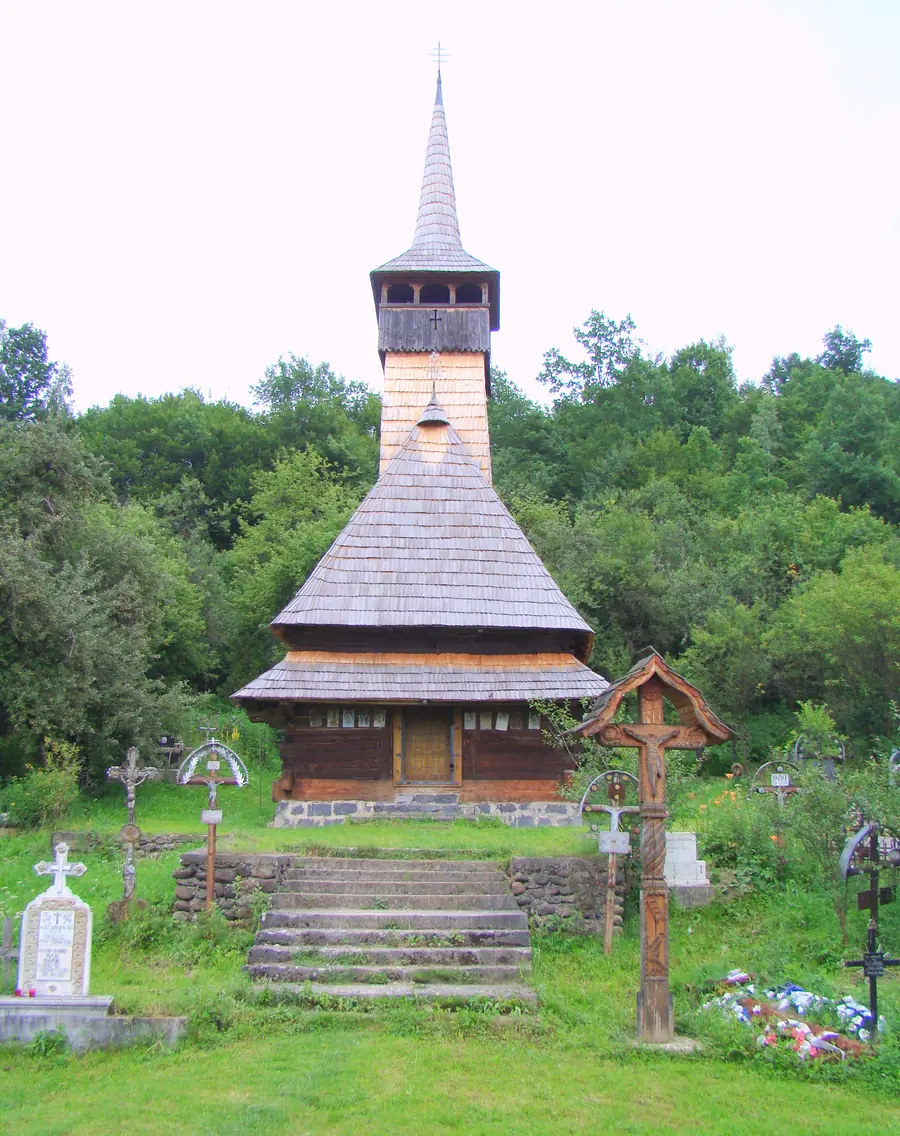
In the north of Romania, two regions preserve traditions that have disappeared elsewhere in Europe. Maramureș is a land of wooden churches, carved gates and villages where hay is still cut by hand. Bucovina is famous for monasteries whose exterior walls are covered in colourful frescoes. Together they make one of the most rewarding journeys in the country.
Maramureș Eight wooden churches in Maramureș are part of a UNESCO World Heritage listing. Their slender shingle towers rise above villages such as Surdești, Bârsana, Ieud and Poienile Izei. Inside, painted scenes tell stories for people who once could not read. Many houses have monumental carved wooden gates, and in the villages you will still see traditional dress at church on Sundays.
The Merry Cemetery in Săpânța is unlike any other: colourful carved crosses with short humorous verses and small paintings about the life of the person buried there. The tradition began in the 1930s with the woodcarver Stan Ioan Pătraș and continues today.
At Vișeu de Sus you can ride Mocănița, a narrow-gauge steam train that climbs the Vaser Valley through the forest, one of the last working forest railways in Europe. The Bârsana Monastery has a very tall wooden church and is a peaceful place to stop.
Bucovina Several painted monasteries in Bucovina, built in the fifteenth and sixteenth centuries, are part of a UNESCO World Heritage listing. Their exterior walls are covered with frescoes of biblical scenes. Voroneț, sometimes called the Sistine Chapel of the East, is known for its Last Judgement and a deep blue colour called Voroneț blue. Sucevița is a fortified monastery with green tones in its paintings, and Moldovița and Humor have their own distinctive palettes. Putna Monastery is the burial place of Stephen the Great, a medieval ruler remembered as a defender of the country.
Crafts and daily life In Moldovița and nearby villages, women paint Easter eggs using wax and dyes in patterns passed from generation to generation. In Marginea, potters make distinctive black ceramics. Staying with a local family is the best way to taste traditional dishes and to see how the seasons shape life in the village.
When to go Summer is the easiest time, with long days and many festivals. Easter is special, with processions and painted eggs. Autumn brings harvest and golden light. Winter is cold but beautiful for those who enjoy snow and traditions around the winter holidays.
Practical tips When visiting monasteries, dress modestly, with covered shoulders and knees, and be quiet during services. Ask before photographing people. Roads between villages can be slow, so plan shorter days. Book guesthouses early for Easter and for August.
Here, tradition is not a performance. It is daily life, and visitors are welcome to share it with respect.